


The IRS is moving toward a fully digital tax system, and by 2026, paper-based processes will largely be a thing of the past. This shift will affect how businesses make payments, receive notices, manage refunds, and interact with the IRS overall. While this change aims to improve efficiency, it also means that businesses unprepared for digital compliance may face delays, penalties, or unnecessary stress.
For Houston small businesses, startups, and self-employed professionals, waiting until the last minute is a risky strategy. Many companies still rely on manual bookkeeping, paper checks, or outdated financial processes that won’t align with the IRS’s new digital-first approach. Preparing in 2025 gives business owners time to upgrade systems, correct issues, and avoid disruptions before the changes become mandatory.
The biggest mistake business owners can make is assuming this transition only impacts large corporations. In reality, small and mid-sized businesses will feel the effects first—especially those that manage cash flow closely or handle taxes without professional support. Understanding what’s coming and taking action early can transform this IRS change from a compliance burden into an opportunity to run a more organized and efficient business.

When the Internal Revenue Service says it is moving to a “fully digital” tax system, it doesn’t simply mean filing returns online. It represents a fundamental shift in how businesses interact with the IRS on every level—from payments to notices, records, and compliance tracking.
By 2026, paper checks, mailed notices, and manual processes will be largely eliminated. Most tax-related activity will be handled through online IRS accounts, electronic payment systems, and automated data matching.
Here’s what that means in practical terms for Houston businesses:
While this transition is designed to improve efficiency, digital does not automatically mean simpler. Businesses without clean records, updated systems, or clear internal processes may find compliance more challenging—not less.

While the IRS’s move to a fully digital system will impact all taxpayers, certain types of businesses in Houston will feel the effects more quickly and more intensely—especially those already operating with tight margins or manual financial processes.
Many Houston SMBs still rely on basic bookkeeping software, spreadsheets, or paper-based workflows. These businesses are more vulnerable to:
Without real-time financial visibility, digital compliance becomes reactive instead of strategic.
Houston has a large population of consultants, tradespeople, and independent contractors. For this group:
For solo operators, one missed notice or payment can quickly escalate into a larger tax issue.
Fast-growing businesses often prioritize sales and operations over backend systems. As a result:
In a fully digital IRS environment, growth without structure increases risk.
Companies that:
will face the steepest learning curve as the IRS shifts to automation.
Houston’s economy is driven by service businesses, contractors, startups, and family-owned companies. These businesses are agile—but that agility only helps if financial systems keep pace with regulatory changes.

As the Internal Revenue Service moves toward a fully digital system, businesses that delay preparation expose themselves to new types of risk that didn’t exist—or weren’t as severe—in a paper-based environment. These risks often appear suddenly and escalate quickly.
In a digital-first system:
Missing a single message can lead to penalties, interest, or enforcement actions, even if the issue was unintentional.
Businesses accustomed to mailing checks or paying at the last minute may face:
With less human intervention, the IRS will not “wait” for corrections the way it sometimes did before.
A digital IRS moves faster, which means:
Businesses without proper forecasting may find themselves short on cash at the exact moment taxes are due.
With better automation and data matching:
This doesn’t mean more audits—but it does mean less tolerance for inaccurate or incomplete data.
Many small businesses don’t clearly define:
In a digital system, unclear responsibility often leads to missed actions—and the IRS does not accept internal miscommunication as an excuse.
The most important takeaway is this:
These problems are rarely caused by the digital system itself—but by lack of preparation.
Businesses that update processes early, clean up records, and establish clear financial workflows can reduce risk, improve efficiency, and gain peace of mind.
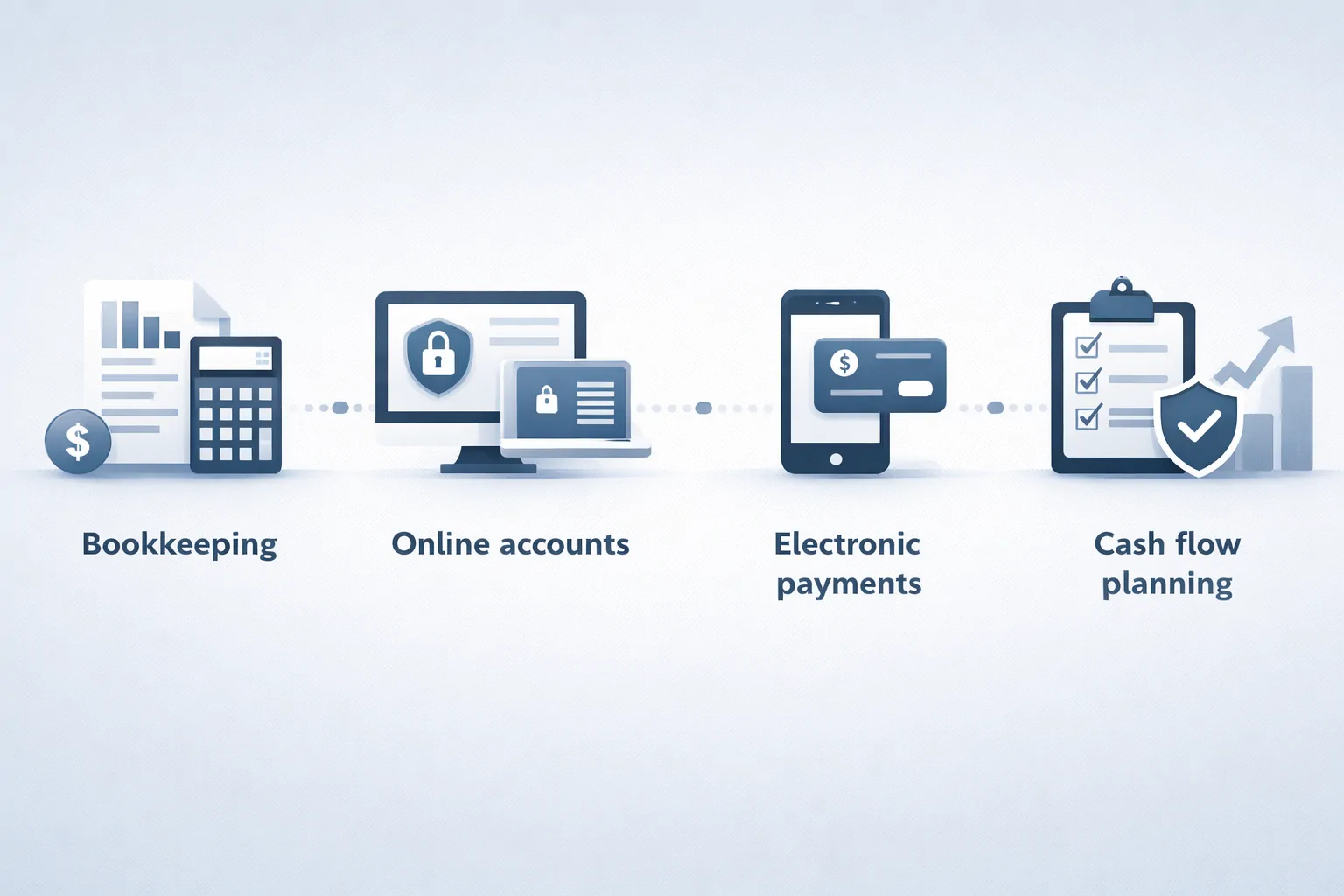
Preparing for the IRS’s fully digital system doesn’t require a massive overhaul—but it does require intentional updates to how your business handles finances and taxes. The goal is simple: reduce friction, eliminate surprises, and stay compliant in a faster, automated environment.
Below is a clear, realistic roadmap for businesses in Houston.
If your financial records aren’t accurate and up to date, digital compliance becomes risky.
Key actions:
Clean, real-time books are the foundation of digital tax compliance.
In a digital-first system, your IRS account becomes your primary point of contact.
You should:
If you don’t monitor your IRS account, you may miss critical notices.
Paper checks introduce delays—and in a digital system, delays equal penalties.
Prepare by:
Electronic payments require planning, not last-minute execution.
Many compliance problems aren’t technical—they’re organizational.
Clarify:
Clear responsibility prevents missed actions.
A faster IRS means less flexibility when taxes come due.
Best practices:
Reactive tax planning no longer works in a digital system.
As automation increases, professional oversight becomes more valuable—not less.
An advisor can:
Preparation is easier—and safer—when it’s guided.

One of the most underestimated consequences of a fully digital Internal Revenue Service is its impact on cash flow timing and financial planning. While the system may feel more efficient, it also moves faster—and that speed leaves little room for financial improvisation.
For businesses in Houston, where many companies operate with seasonal revenue or fluctuating income, this shift is especially important.
In a digital environment:
This means businesses lose the informal “buffer” that sometimes existed with paper checks or delayed notices.
If cash isn’t ready when taxes are due, penalties follow automatically.
In the past, some businesses relied on:
A digital IRS eliminates much of that flexibility.
Tax planning must happen before deadlines—not after them.
With faster enforcement:
Cash-flow forecasting is no longer optional—it’s a compliance tool.
Businesses that only think about taxes at filing time often experience:
In a digital system, reactive planning turns minor issues into major disruptions.
Businesses that plan ahead benefit from:
Digital systems reward preparation and punish neglect.

As the IRS becomes more automated, the role of professional tax and financial advisors becomes more strategic—not less. A fully digital system reduces manual flexibility, which means expert oversight helps prevent small issues from becoming costly problems.
For businesses in Houston, where growth, seasonality, and cash-flow variability are common, having structured support can make the difference between reacting to IRS notices and staying ahead of them.
A professional tax advisor helps ensure that:
In a digital system, early action matters more than explanations after the fact.
Advisory support connects tax planning with real cash availability by:
Taxes should be planned expenses—not surprises.
As IRS systems compare data more efficiently, professional oversight helps:
Automation rewards accuracy and consistency.
Advisors help businesses establish:
Structure protects businesses when systems move faster than people.
Perhaps most importantly, professional support allows owners to:
In a digital IRS environment, confidence comes from preparation—not guesswork.
As the IRS removes manual friction, businesses that rely on informal or reactive processes will feel the pressure first. Professional tax and CFO guidance provides the structure needed to operate smoothly in a system that values speed, accuracy, and accountability.

The IRS’s transition to a fully digital tax system is not a temporary change—it’s a permanent shift in how tax compliance works. While the technology behind it may evolve, the expectations around speed, accuracy, and accountability are here to stay.
For business owners, the real question isn’t whether the IRS is going digital—it’s whether your business is ready to operate confidently in that environment. Companies that prepare early benefit from:
Preparation is not about doing more—it’s about doing things right once.
By upgrading systems, clarifying processes, and planning ahead, businesses can turn a regulatory change into an opportunity to run leaner, smarter, and more predictably.
If your business still relies on manual processes, reactive tax planning, or last-minute payments, now is the time to prepare—not when digital enforcement becomes unavoidable.
SAS Tax & Business Solutions helps Houston businesses:
Ready to simplify your finances and stay ahead of upcoming IRS changes?
Call (832) 263-7308 or email [email protected] to schedule a consultation.